Kangkung Belachan with Shrimp & Tomatoes
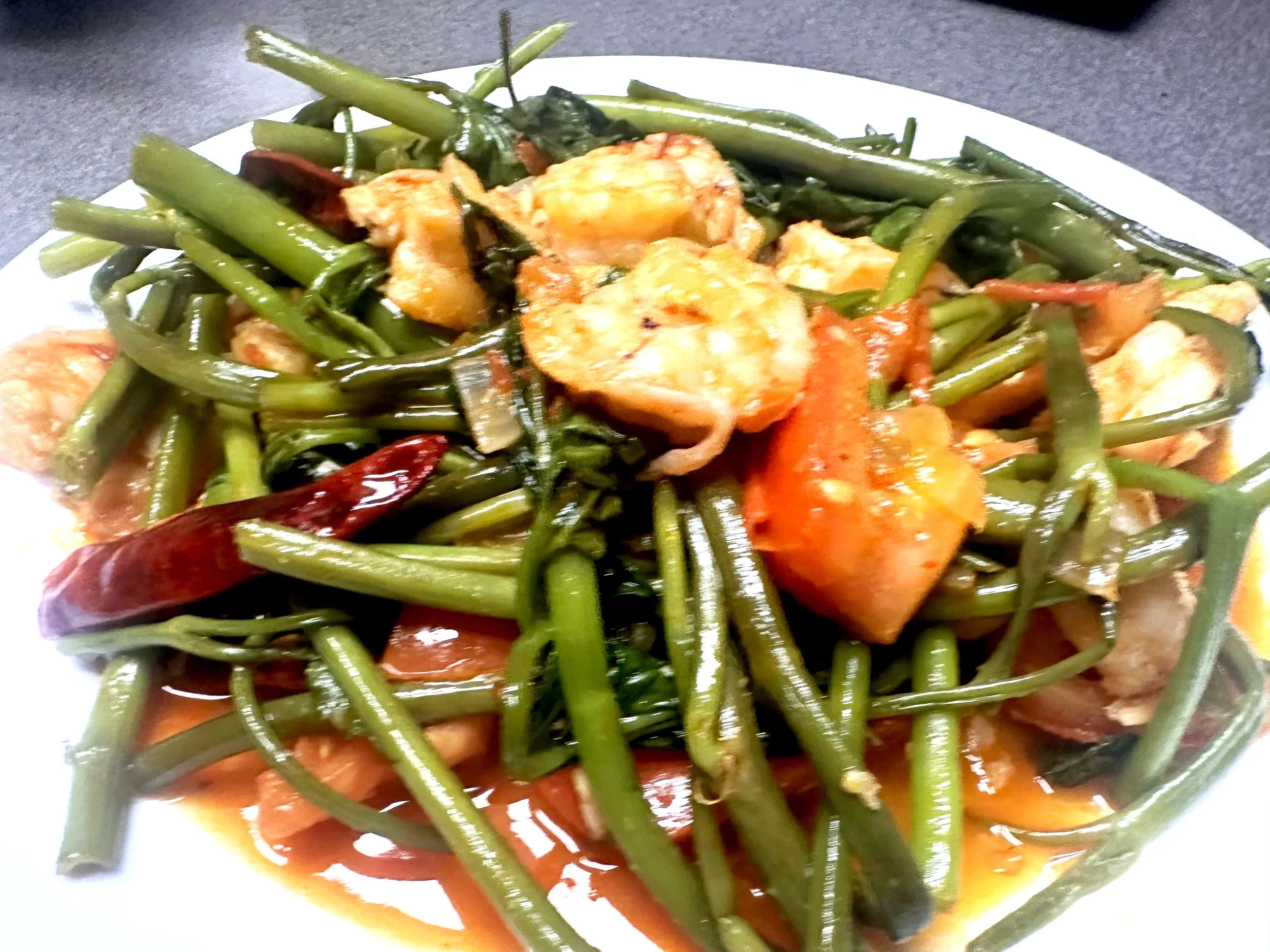
Kangkung Belachan with Shrimp & Tomatoes — a flavor I first discovered in Singapore.
A flavor I first discovered in Singapore—and one I still crave and make in my own kitchen.
A Flavor I First Discovered in Singapore
Some food memories have a way of staying with us.
I first tasted belachan at an Indonesian restaurant in Singapore, and I still remember how much I enjoyed that bold combination of savory and spicy flavors. It was one of those dishes that stayed in my memory long after that first taste.
I didn’t immediately try to recreate it myself. But whenever I found myself craving that distinctive belachan flavor, I eventually started making my own version at home.
The dish I remembered included shrimp and tomatoes, and those became part of the way I make it too. I use medium-to-large shrimp, at least two fresh tomatoes, plenty of kangkung, and that unmistakable belachan flavor that brings everything together.
Over time, it simply became my Kangkung Belachan—one of those dishes I return to whenever the craving hits.
And every time I make it, I’m reminded why some dishes deserve more than just a place on our dinner table.
This one deserves a little footprint in my Taste Journal. ❤️
What Is Kangkung Belachan?
Kangkung is a leafy green vegetable also known as water spinach. It has tender leaves and hollow, slightly crunchy stems and is widely enjoyed in Southeast Asian cooking.
Belachan is a fermented shrimp paste with a strong aroma and a wonderfully deep, savory flavor. A little goes a long way, especially when combined with garlic, onion and chilies.
Put the two together and you get a dish that’s simple but packed with flavor.
My version goes a little further with fresh shrimp and tomatoes. The shrimp makes it more substantial, while the tomatoes add freshness and a slight sweetness that balances the salty, savory belachan.
It’s the combination I remember enjoying—and the way I’ve continued making it ever since.
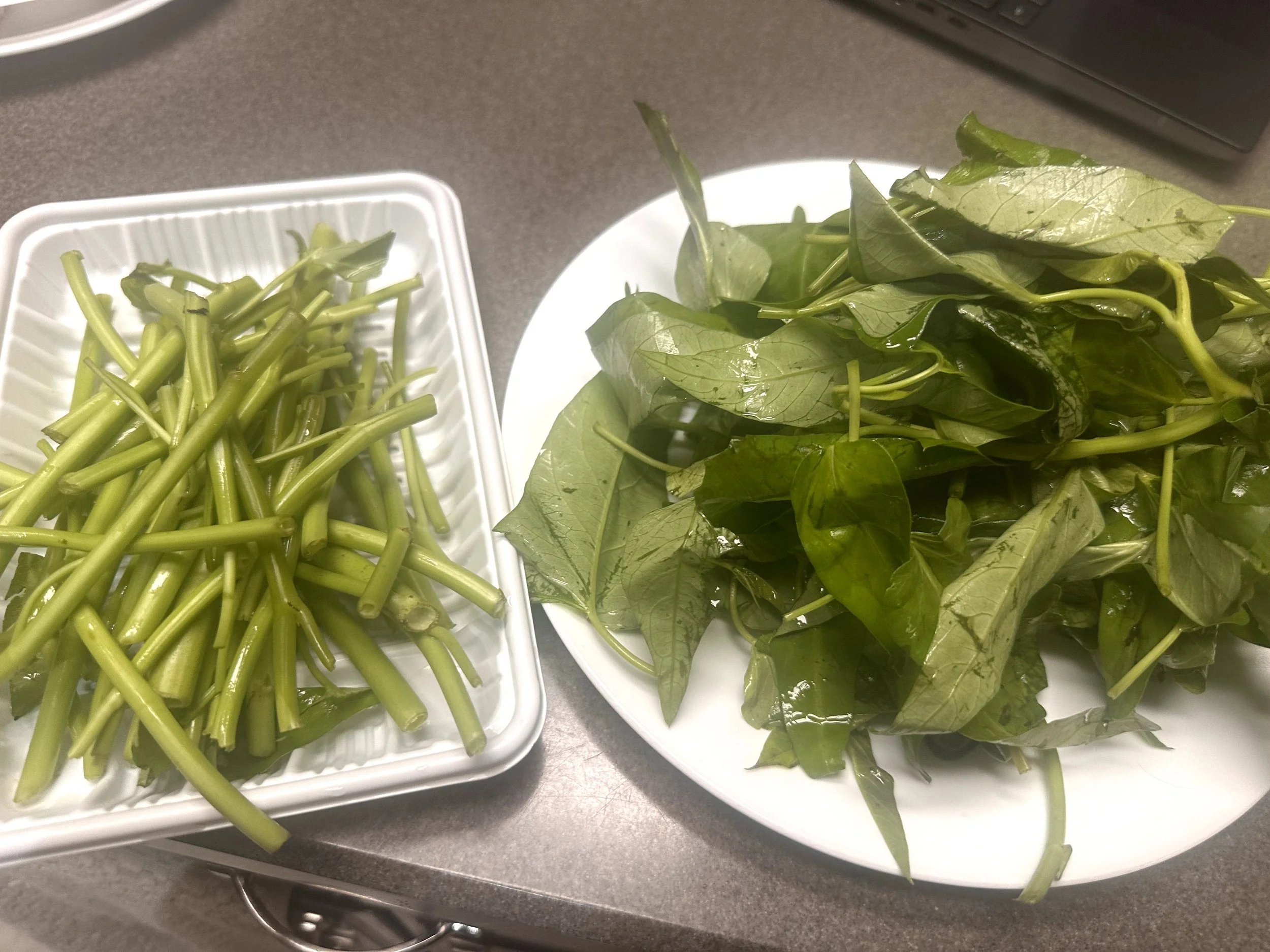
Some flavors stay with us. This is one I still crave and make in my own kitchen.
My Kangkung Belachan with Shrimp & Tomatoes
The beauty of this dish is how quickly everything comes together.
The most important thing is not to overcook the kangkung. I like the leaves just wilted and the stalks with a little crunch.
Ingredients
For the Belachan Shrimp Base
• 2 cloves garlic, minced
• 1 small white onion, chopped
• 4 dried chilies, chopped, or about 2 teaspoons red chili paste
• 1 tablespoon belachan (shrimp paste) — Shop the belachan I use on Amazon
• ½ pound medium-to-large shrimp, peeled and cleaned
• 2 medium tomatoes, cut into wedges or chunks
• 1 tablespoon vegetable oil
For the Kangkung
• 1 bunch kangkung, about 300 g
• Up to ¼ cup water, only if needed
• Salt, only if needed
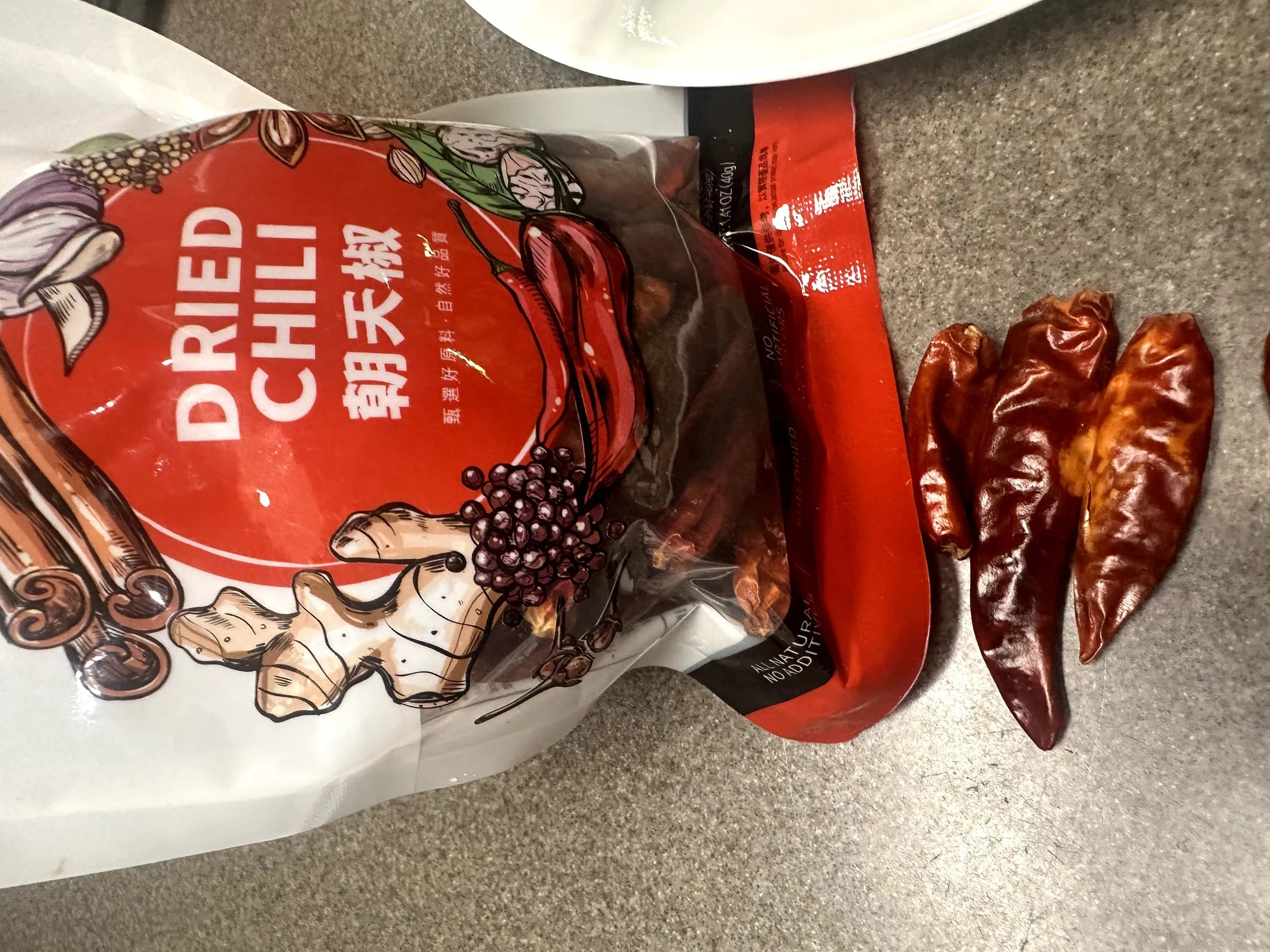
A little heat to go with that bold, savory belachan flavor.
How I Make It
1. Prepare the kangkung.
Rinse the kangkung thoroughly and cut it into roughly 2-inch (5 cm) lengths.
Separate the firmer stalks from the leafy portions. The stalks need just a little more time in the pan, so we’ll cook those first.
2. Start with the aromatics.
Heat the vegetable oil in a large frying pan or wok over medium-high heat.
Add the onion and garlic and sauté for about a minute, until the onion begins to turn translucent and everything becomes fragrant.
Add the dried chilies or red chili paste and give it a quick stir.
3. Add the shrimp.
Add the shrimp and cook for about 2 minutes, stirring occasionally, until they begin to turn pink.
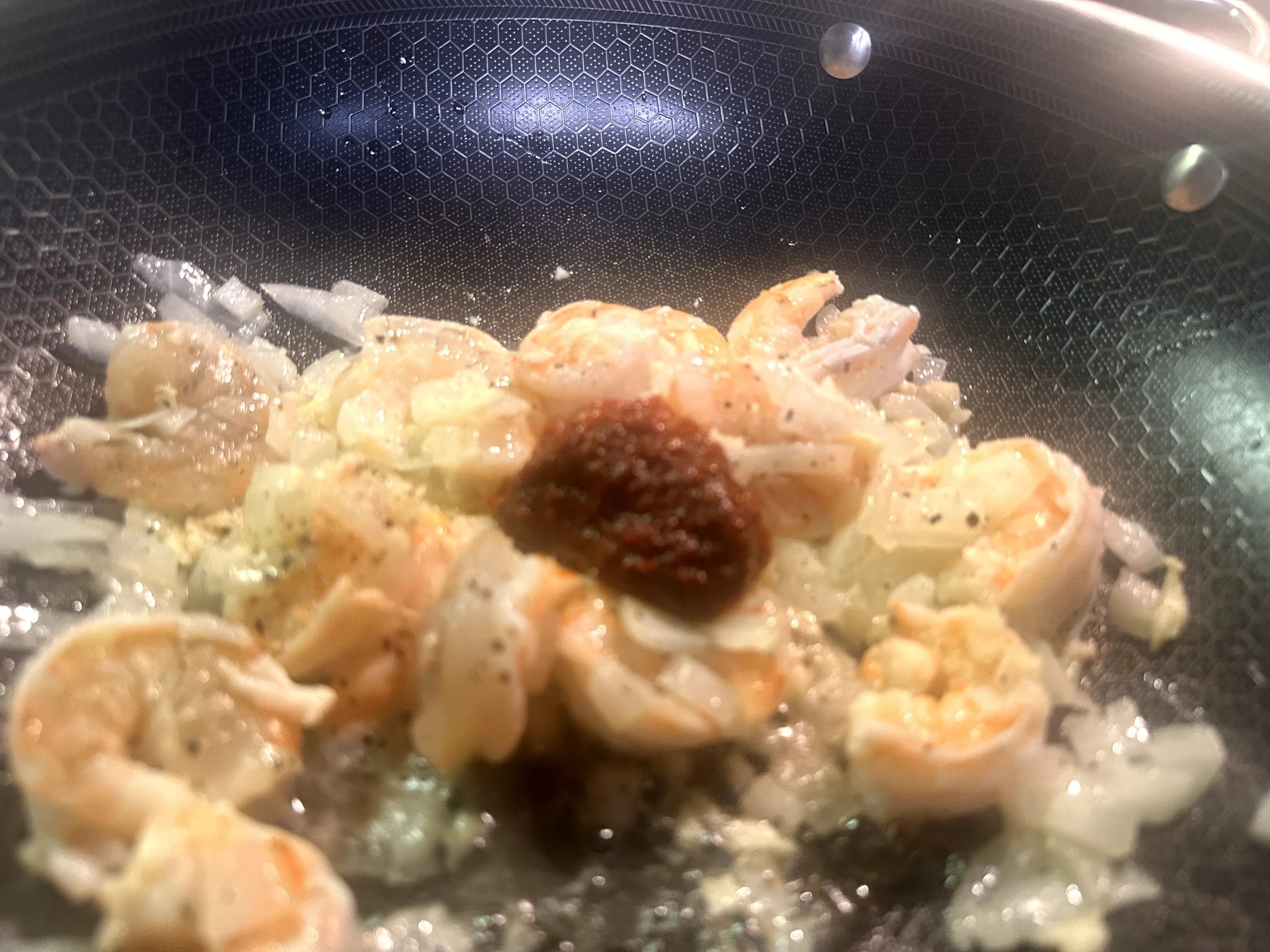
The shrimp goes in before the kangkung.
4. Bring in the tomatoes and belachan.
Add the tomatoes and cook briefly, allowing them to soften while still keeping some of their shape.
Stir in the belachan paste and mix well, coating the shrimp and tomatoes with all that savory, spicy flavor.
This is where the dish really starts to come together.
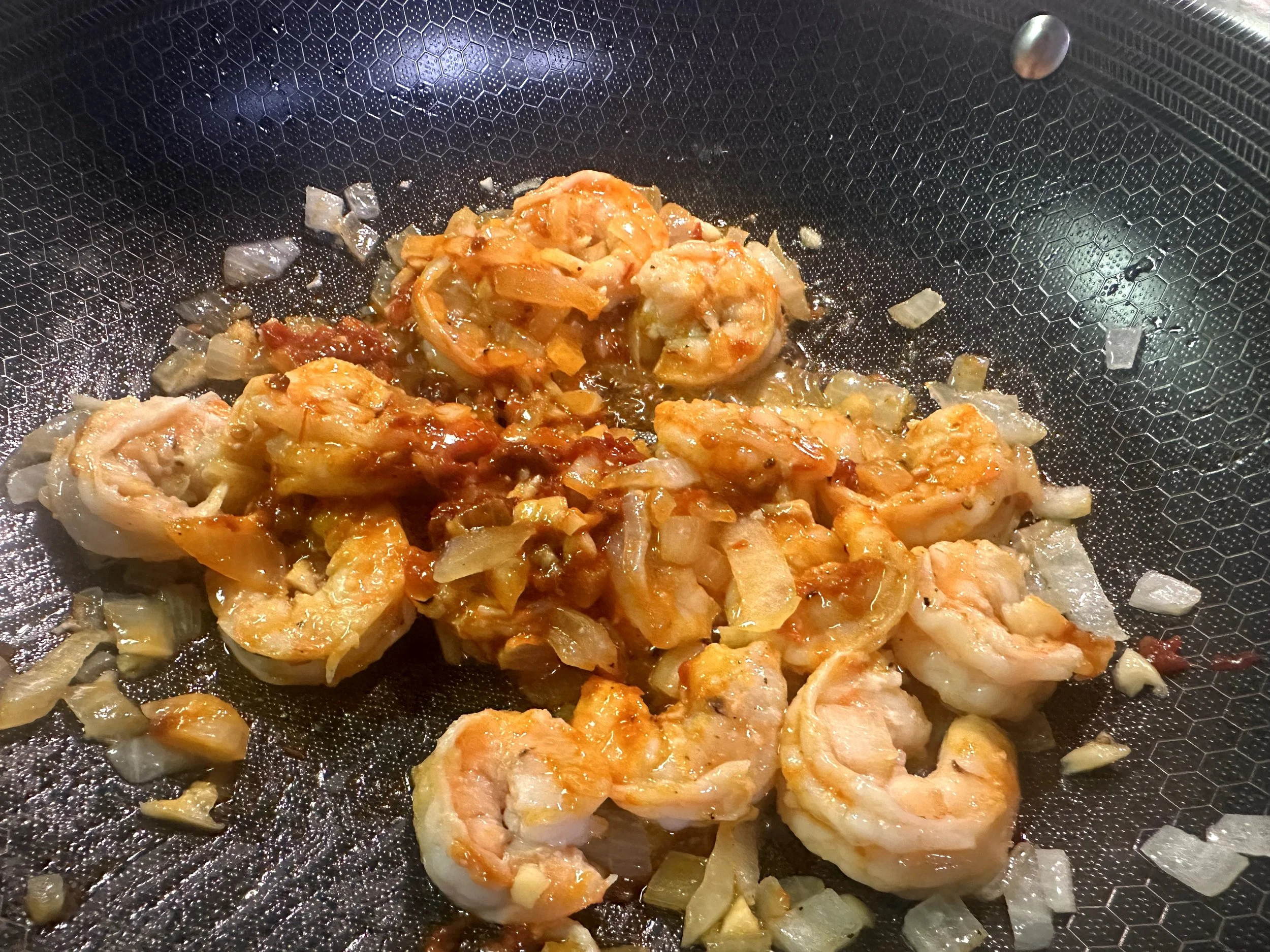
This is where that unmistakable savory, spicy belachan flavor starts coming together.
5. Cook the kangkung stalks first.
Add the firmer kangkung stalks and toss them through the shrimp, tomatoes and belachan mixture.
If the pan looks a little dry, add a small amount of water. You don’t necessarily need the entire ¼ cup—just enough to help everything cook together.
Let the stalks cook for about 2 minutes.
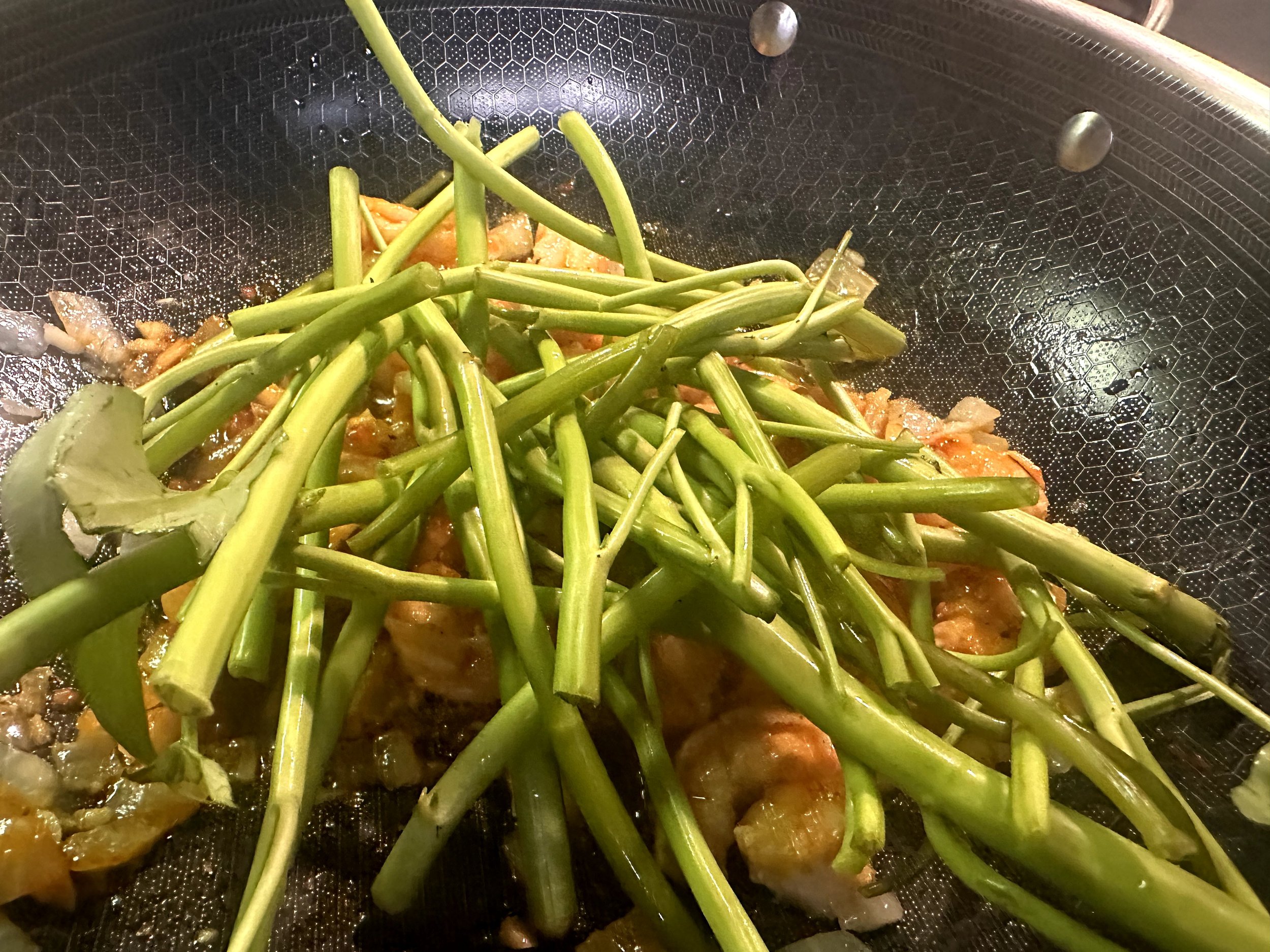
The firmer stalks go in first so they have a little extra time to cook.
6. Add the leaves last.
Now add the kangkung leaves and give everything a quick toss.
Cook just until the leaves begin to wilt, about 30–60 seconds, then remove the pan from the heat.
Kangkung cooks very quickly, and I think it’s best when the stalks still have a slight crunch. There’s no need to overcook it—the fresh texture is part of what makes this vegetable so good.
7. Taste before adding salt.
Give everything a final taste before adding salt.
Belachan already brings plenty of salty, savory flavor to the dish, so you may find that you don’t need additional salt at all.
Serve immediately while the kangkung is still fresh and slightly crisp.
Emie’s Kitchen Tip
Don’t walk away once the kangkung goes into the pan!
The stalks only need a couple of minutes, and the leaves need even less. Adding the stalks first and the leaves last helps keep the kangkung from becoming too soft.
And always taste before reaching for the salt. Belachan is already salty, so let it do the seasoning first.
How I Like to Serve It
For me, this doesn’t need anything complicated.
A generous serving of Kangkung Belachan with Shrimp & Tomatoes alongside warm steamed rice makes such a satisfying meal.
You get a little bit of everything in one bite—the crunch of the kangkung, juicy tomatoes, tender shrimp, a little heat from the chilies and that unmistakable savory belachan flavor.
It’s simple, comforting and full of flavor.
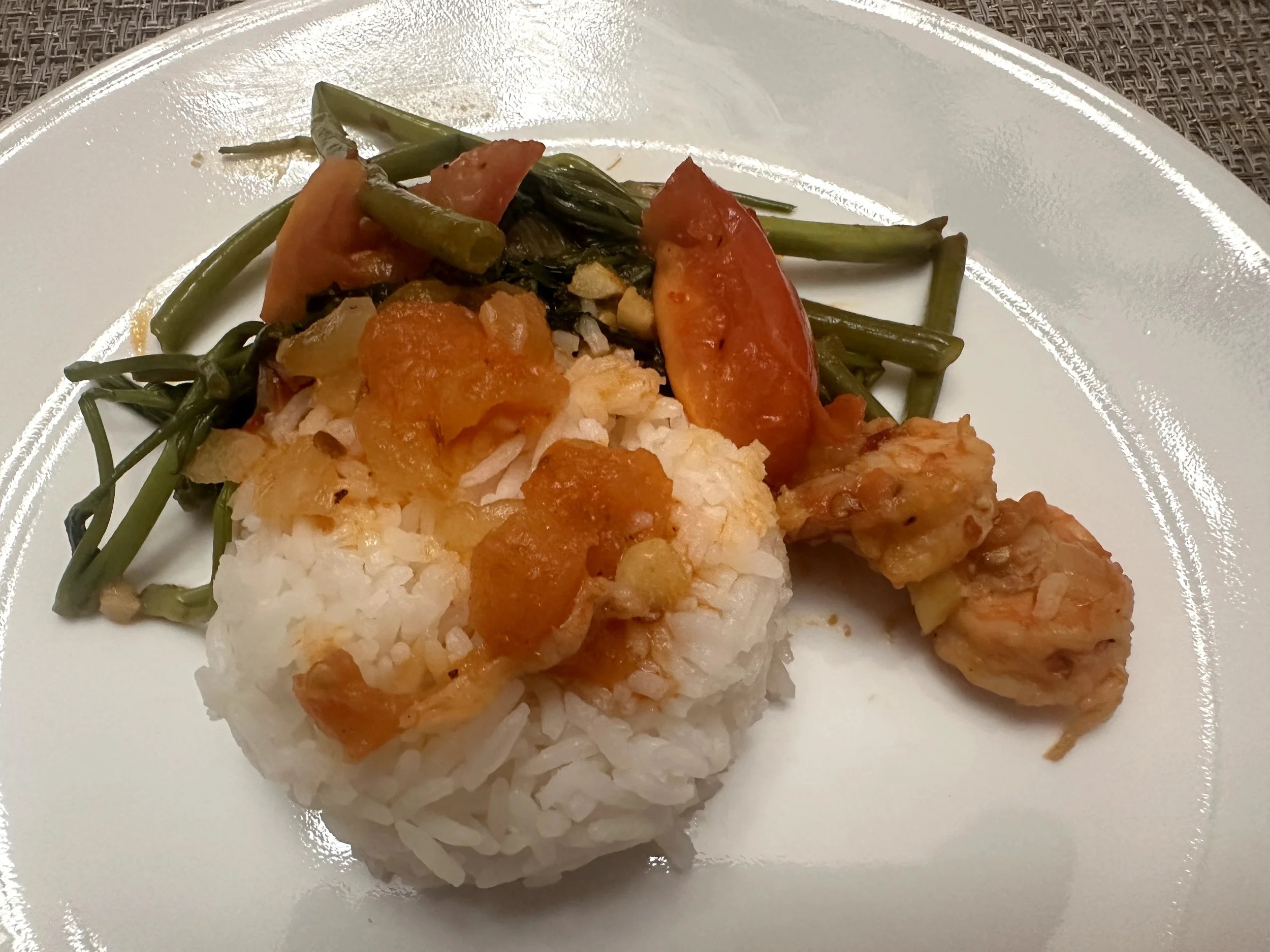
For me, this one simply needs a bowl—or plate—of warm steamed rice. ❤️
When a Flavor Stays With You
One of the things I love about food is how a single flavor can hold a memory.
I first discovered belachan in Singapore. I didn’t come home with a written recipe from that restaurant, and I didn’t immediately start making it myself.
I simply remembered how much I liked it.
Eventually, a craving became an experiment in my own kitchen. And over time, shrimp, tomatoes, kangkung and belachan came together in the version I now make for my family.
That’s one of the reasons I created the Taste Journal.
Not every dish has to come from a special occasion or an elaborate recipe. Sometimes it’s simply something we’ve learned to love, made our own, and continued serving around our family table.
Some flavors stay in our memories. Others find their way into our kitchens.
This one did both. ❤️
Another little footprint from our table.
Faithful Footprints Journey
Travel • Taste • Believe • Cherish
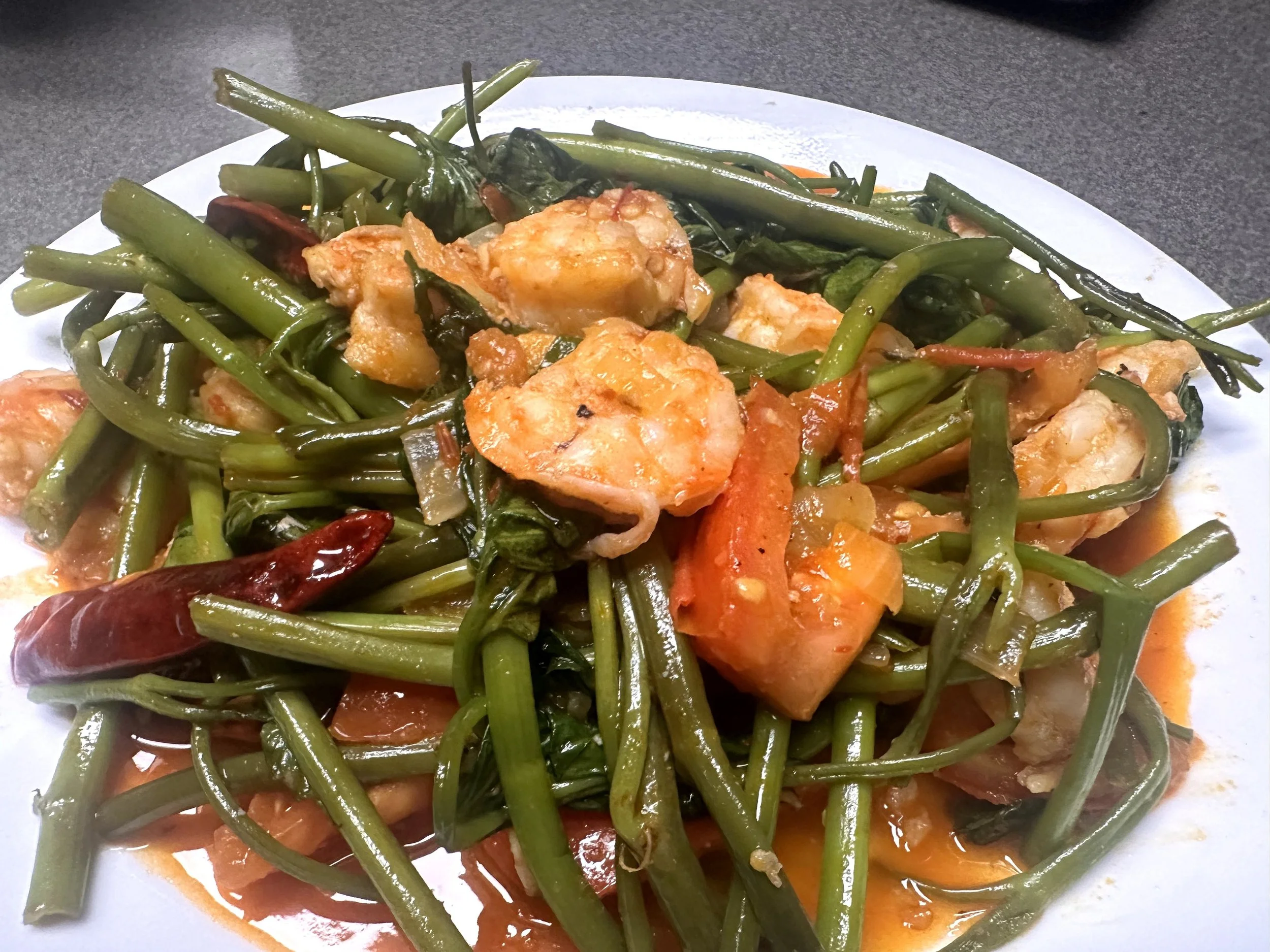
Shop This Recipe
If belachan isn't something you normally keep in your pantry, you can find it online along with a few of the kitchen staples I use for this recipe.
Belachan / Shrimp Paste → Shop on Amazon
Wok or Stir-Fry Pan → Shop on Amazon
Wooden or Silicone Spatula → Shop on Amazon
As an Amazon Associate, I earn from qualifying purchases at no additional cost to you.
