States #20 & #21: Our Winter Red Rock Journey Through Arizona & Utah
2 States. 2 National Parks. 1 Sedona Base. One unforgettable winter road trip.
Some road trips stay with you because of where you went. Others stay with you because the journey between the destinations was just as beautiful.
Our winter road trip through Arizona and Utah gave us both.
It was late December 2020, during an unusual season when travel—and everyday life—looked very different. Yet in the middle of it all, we were blessed with an opportunity to get outdoors, spend time together, and experience some of the most beautiful landscapes we had seen in America.
Arizona became State #20 in our 50 States Journey, followed by Utah as State #21.
With Sedona as our home base, we explored its famous red-rock country, ventured off-road on a guided Jeep tour, spent time at Slide Rock State Park, welcomed 2021 at Zion National Park, and then continued to a snow-covered Bryce Canyon National Park before returning to Sedona.
Two states. Two National Parks. And so many footprints in between.
Sedona — More Than Our Home Base
We arrived in Sedona on December 27, 2020.
I remember posting that we had arrived safely and thanking God for traveling mercies. During a year filled with so much uncertainty, simply reaching our destination together felt like something worth being grateful for.
Sedona was our base for the trip, but it quickly became much more than the place where we slept.
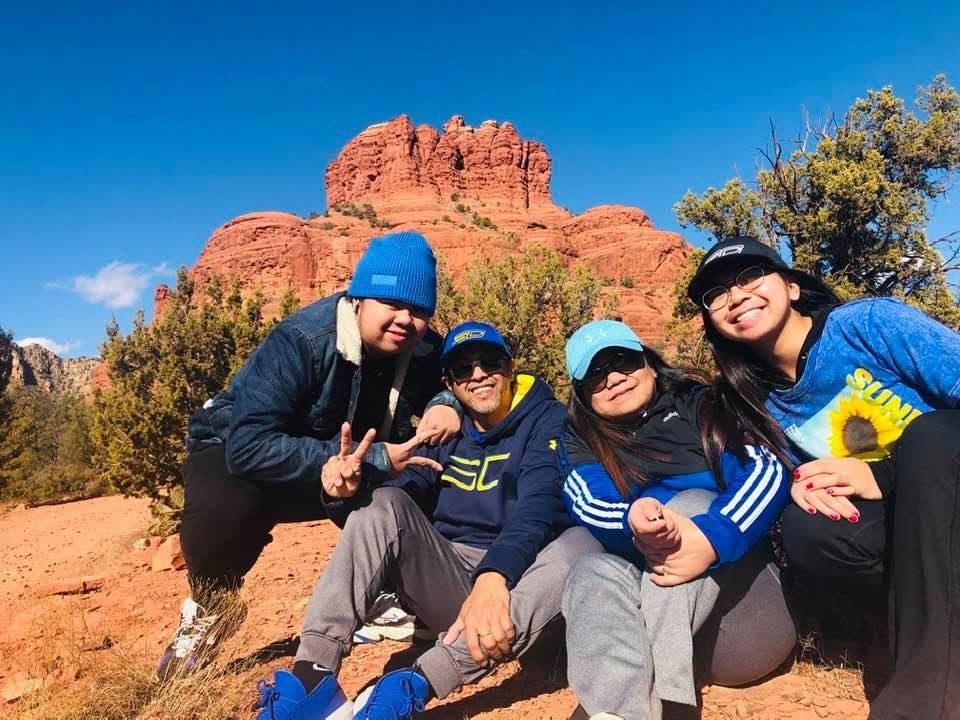
We gave Sedona its own day—and we're so glad we did.
When the Road Became Part of the Destination
One of my clearest memories of Sedona isn't from a particular attraction. It's from inside our car.
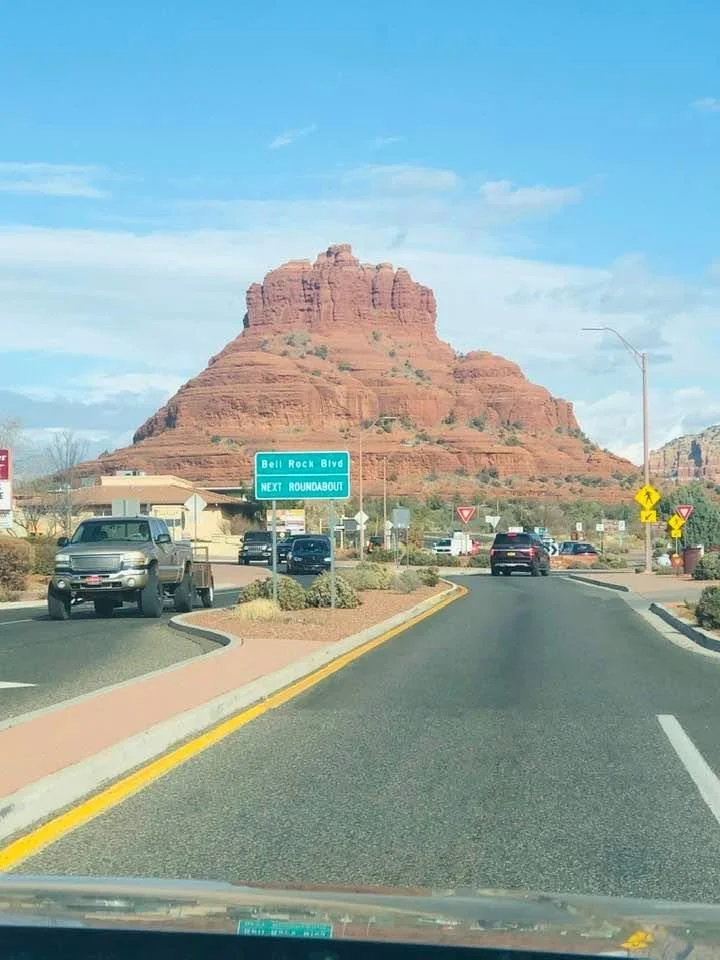
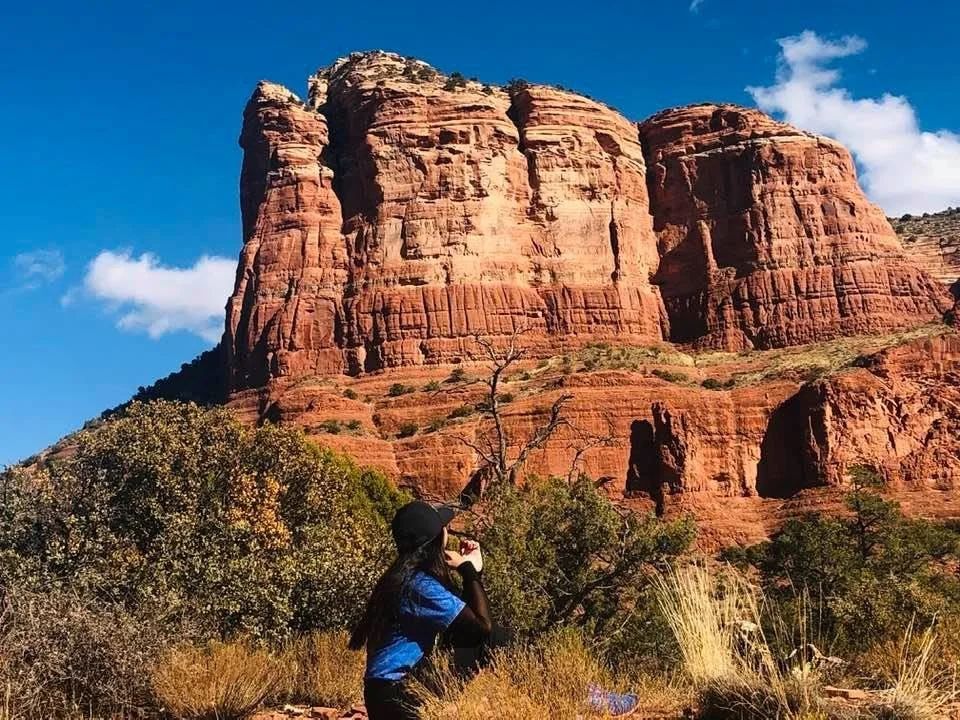
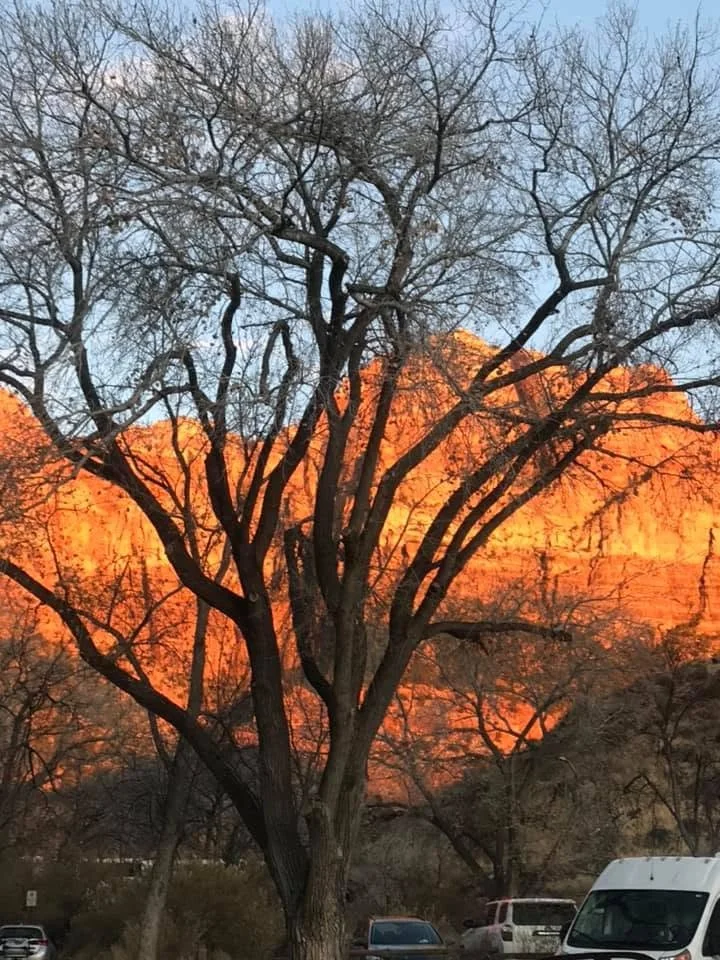
As we cruised through Sedona's scenic red-rock country, enormous formations appeared right before our eyes. Around one bend came another spectacular view. Then another. And another.
We didn't have to reach a destination before the sightseeing began. The road itself was part of the experience.
There were moments when all we could do was look through the windshield and windows and marvel at the red and orange formations towering around us beneath the Arizona sky.
Sometimes the best travel moments aren't planned stops. They're the moments that make you slow down, look around, and appreciate the beauty of God's creation right before your eyes.
Getting Off the Road — Our Sedona Jeep Adventure
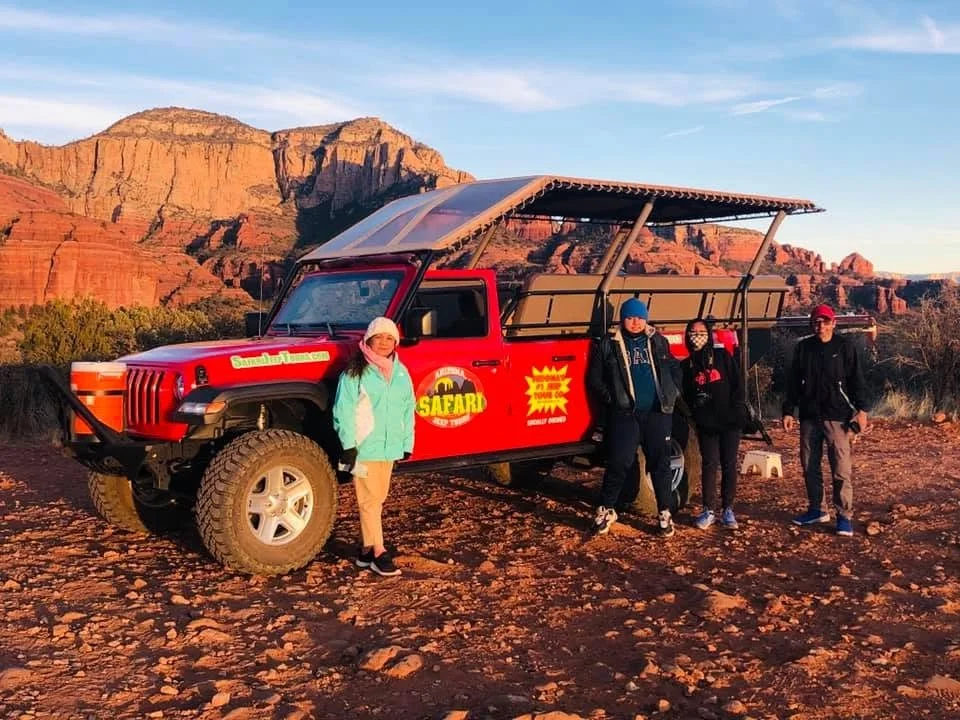
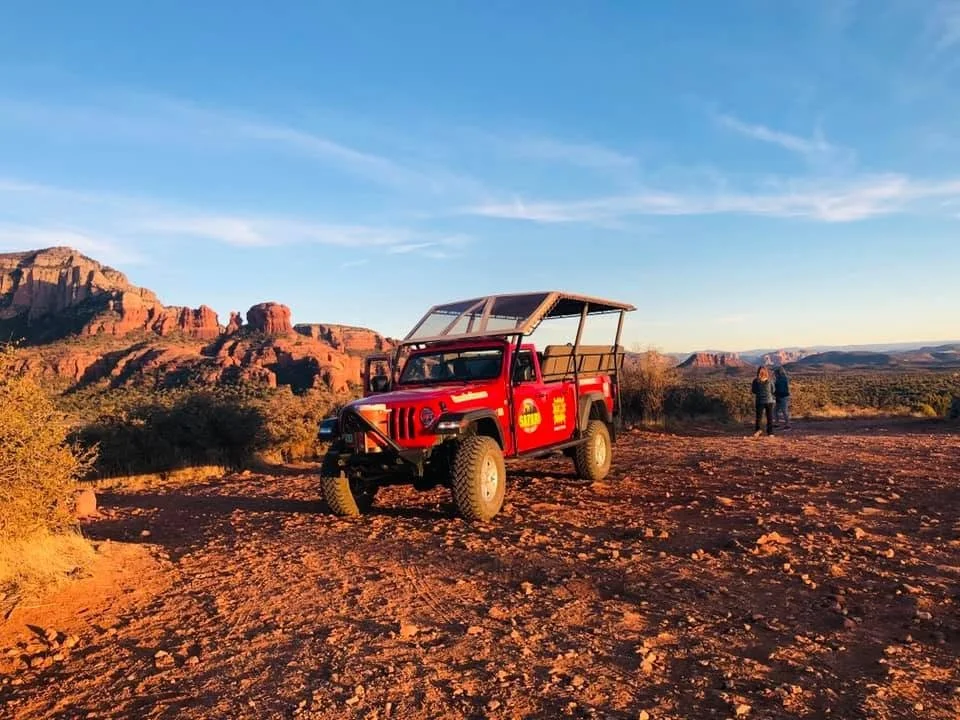
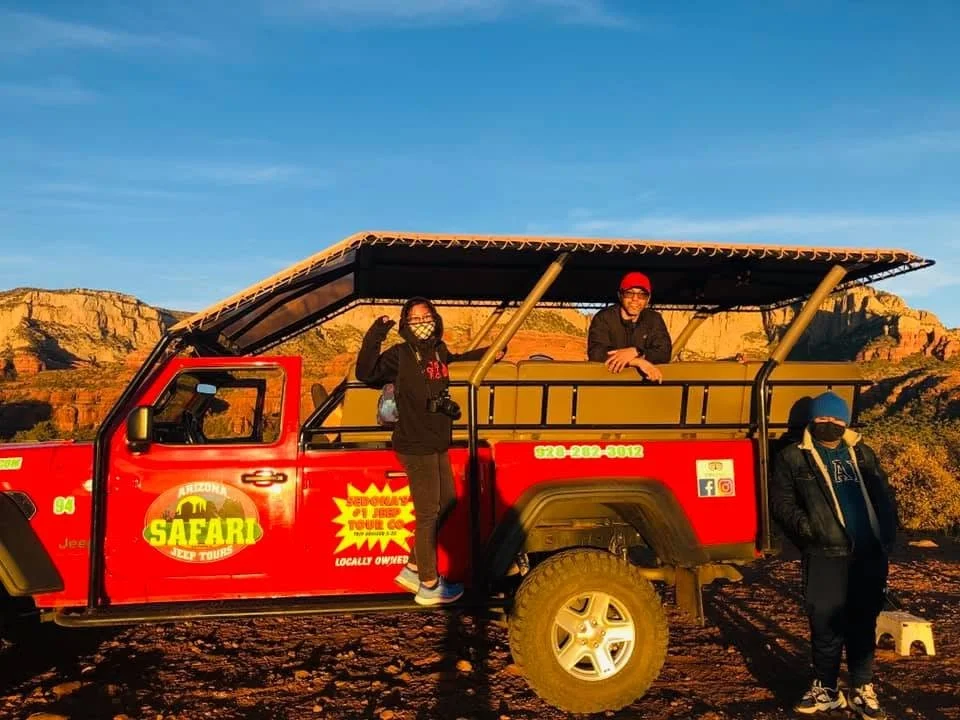
But after seeing Sedona from the road, we wanted to experience another side of it. So we climbed into an open-air Jeep and headed off the pavement.
What could have been simply a fun off-road ride became something much more interesting because our driver was also our guide.
As we traveled over the rugged terrain, he pointed toward the formations around us and shared information about Sedona's red rocks, canyons, geology and history.
Suddenly, those rocks weren't merely a beautiful background for photographs. They had a story.
We came for the red rocks. But somewhere along that bumpy Jeep trail, the rocks became more than scenery. Our guide gave the landscape a story.
That's one of the reasons the tour remains such a memorable part of our Sedona experience. We could see the landscape from the road, but the Jeep tour brought us closer to it—and helped us understand a little more about what we were seeing.
What We Learned Along the Way
Sedona's remarkable colors and formations were created over an enormous span of geological time. Iron-bearing minerals help give many of the rocks their familiar red and orange colors, while erosion has helped shape the cliffs, buttes and other formations that make the area so distinctive.
Learning pieces of that story while actually surrounded by the landscape made the experience much more meaningful.
And because our tour happened in December 2020, our photographs carry another unmistakable reminder of the time: our masks.
Rather than hide that part of the memory, I appreciate it now. Those photographs remind us exactly when this journey happened—and how grateful we were simply to be outdoors, exploring somewhere beautiful together.
Thinking About a Sedona Jeep Tour?
A guided off-road experience gave us a completely different perspective from the scenic drive.
If you're planning your own Sedona trip, consider experiencing the landscape in more than one way: drive through it, stop at the viewpoints, explore on foot where appropriate, and consider a guided red-rock or Jeep experience if it fits your itinerary.
Explore Sedona Red Rock & Jeep Tours →
Affiliate disclosure: Some links on Faithful Footprints Journey may be affiliate links. If you book through them, we may earn a small commission at no additional cost to you. We only feature experiences that fit naturally with the journeys and stories we share.
Slide Rock State Park — Adventure in Oak Creek Canyon
Our Arizona adventure continued at Slide Rock State Park.
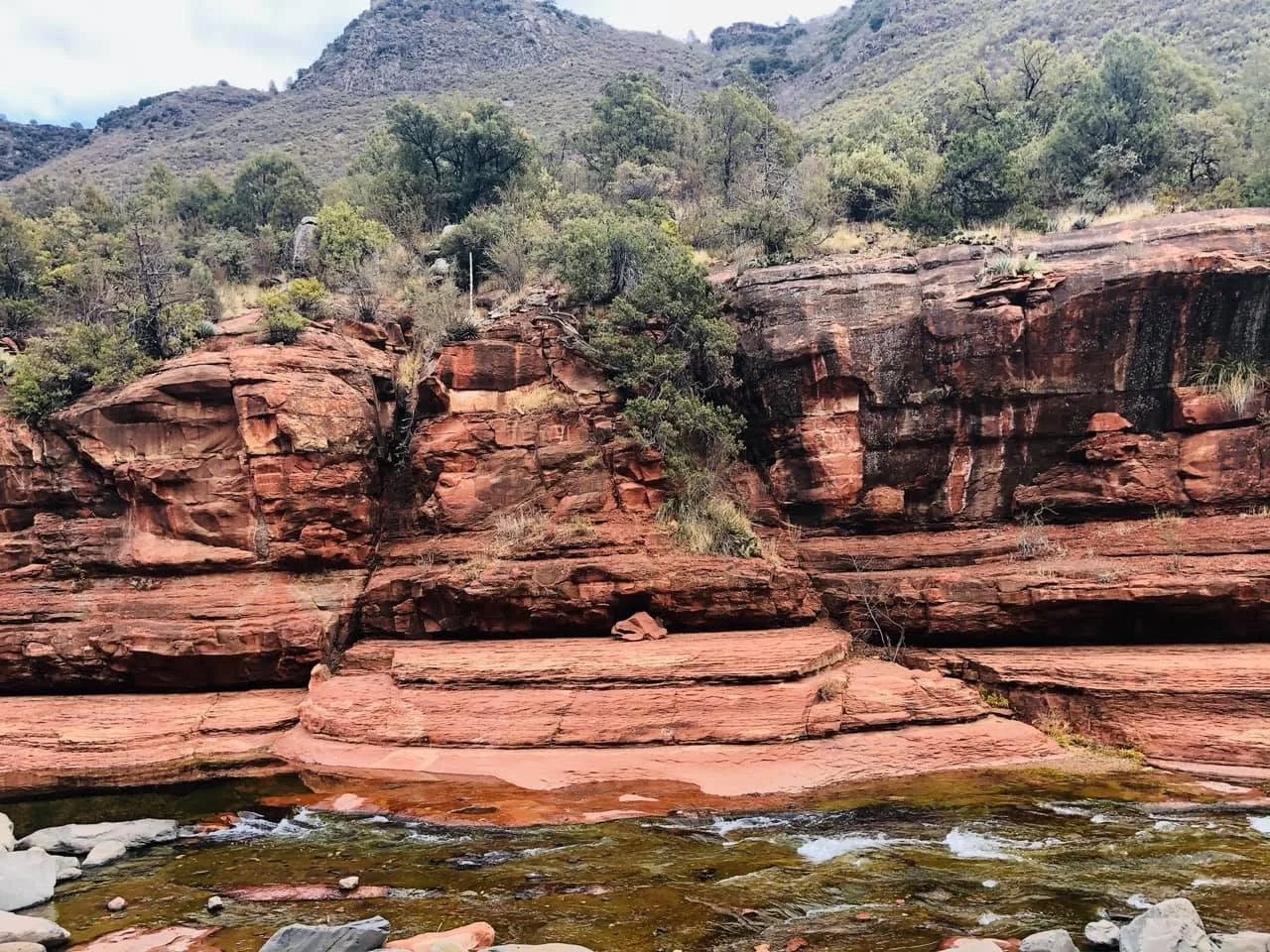
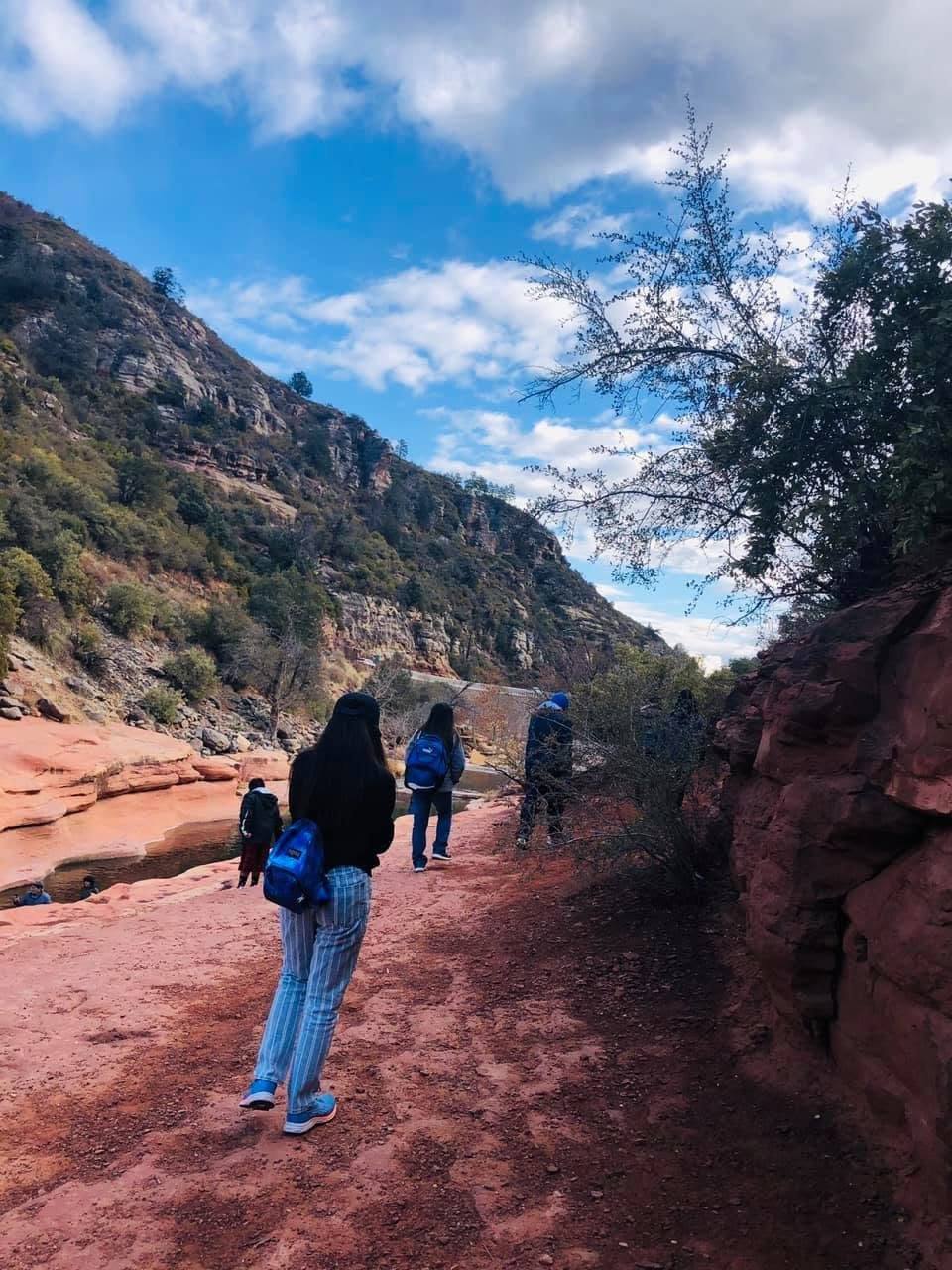
During this part of the trip, we explored with a family of friends from Arizona. Even getting there was memorable as the road carried us through the beautiful scenery of Oak Creek Canyon.
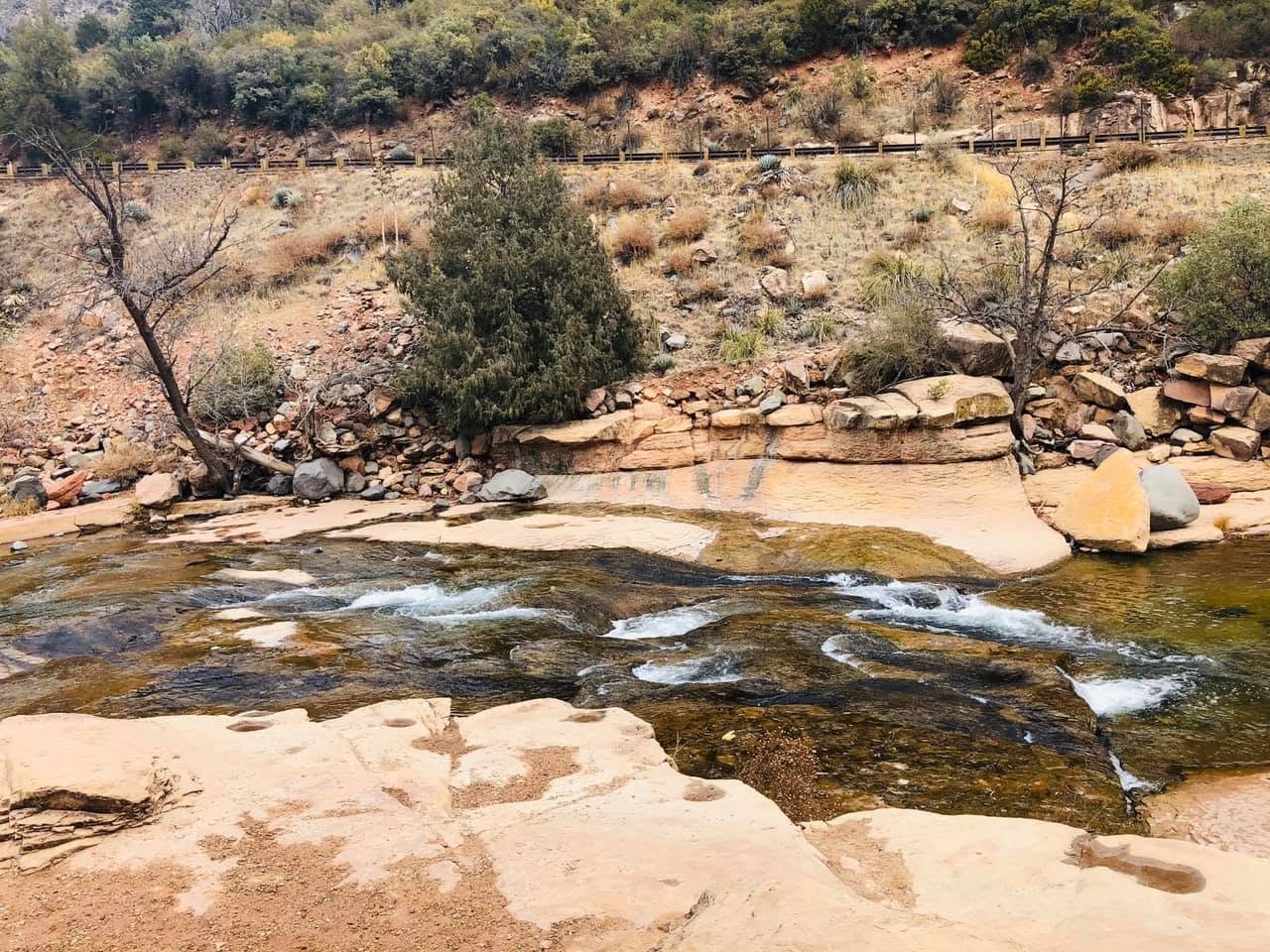
Slide Rock is best known for the natural water slide formed along Oak Creek, where water flows over smooth rock. But this was winter. Our experience wasn't about a summertime swim. We came to explore.
We walked around, enjoyed the canyon scenery, wandered among the rocks and creek, took photographs and simply enjoyed being outside together.
During the COVID era, those seemingly simple moments felt particularly meaningful: fresh air, beautiful scenery, family, friends, and room to explore.
Looking back, Slide Rock reminds me that beautiful places give us photographs—but the people and moments surrounding those photographs are what give them their stories.
Planning note: Arizona State Parks currently requires visitors to enter by vehicle, does not accept reservations, and advises checking current hours and park rules before arriving. See the official Slide Rock State Park visitor page for the latest information.
From Arizona to Utah — State #21
From Arizona, our winter journey continued north into Utah.
Crossing into Utah meant another milestone: State #21 in our 50 States Journey.
And waiting for us were two landscapes that couldn't have looked more different from one another. First came Zion.
Zion National Park — Beginning 2021 Surrounded by Beauty
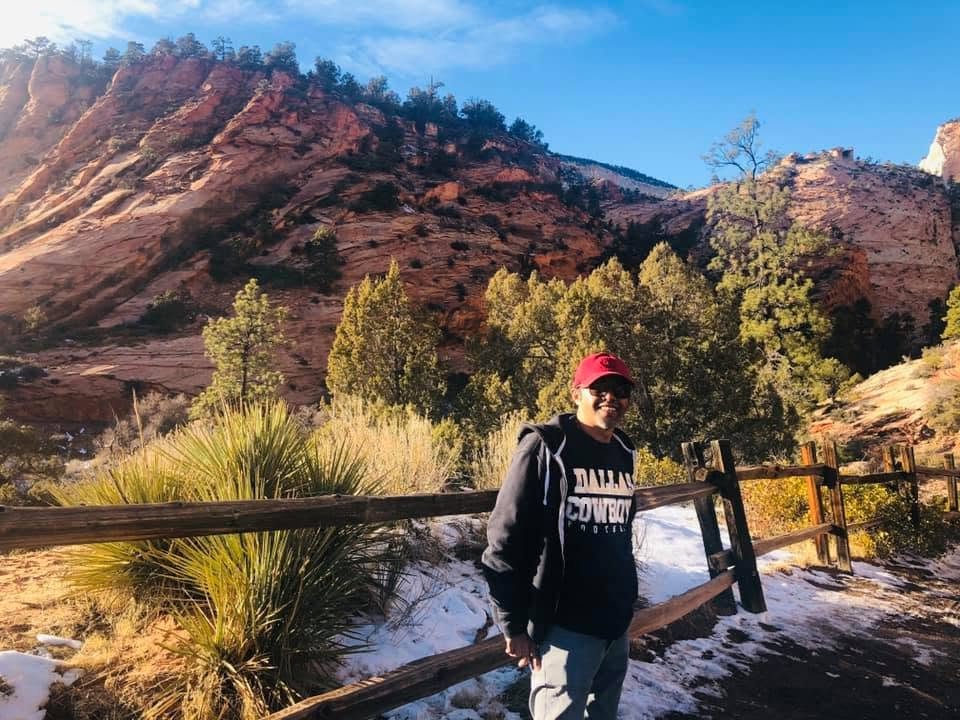
On January 1, 2021, we welcomed the new year at Zion National Park. What a way to begin a year.
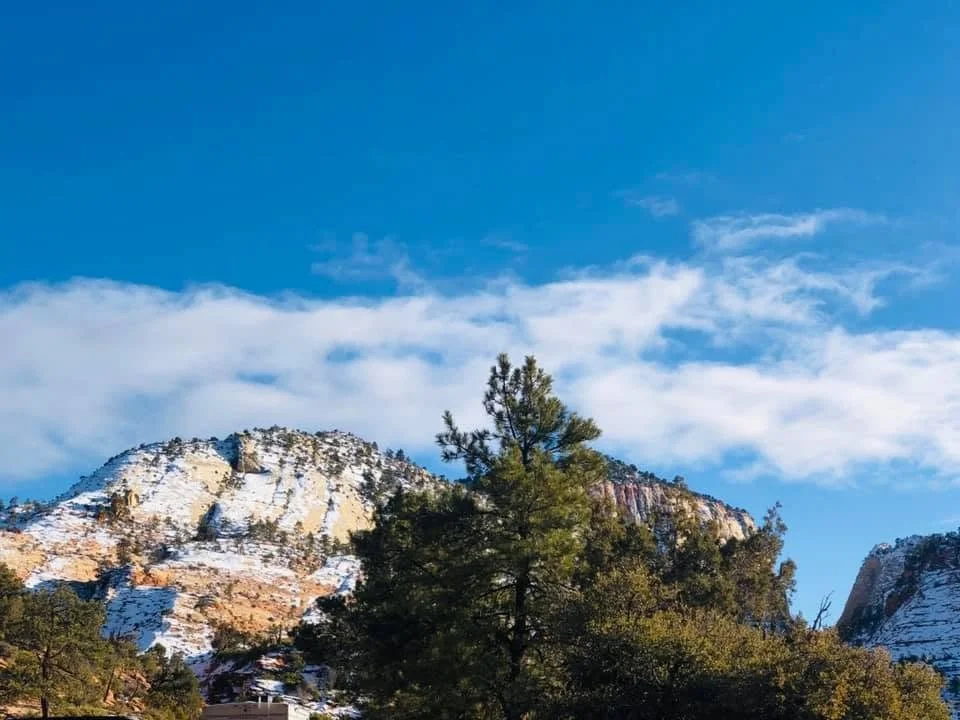
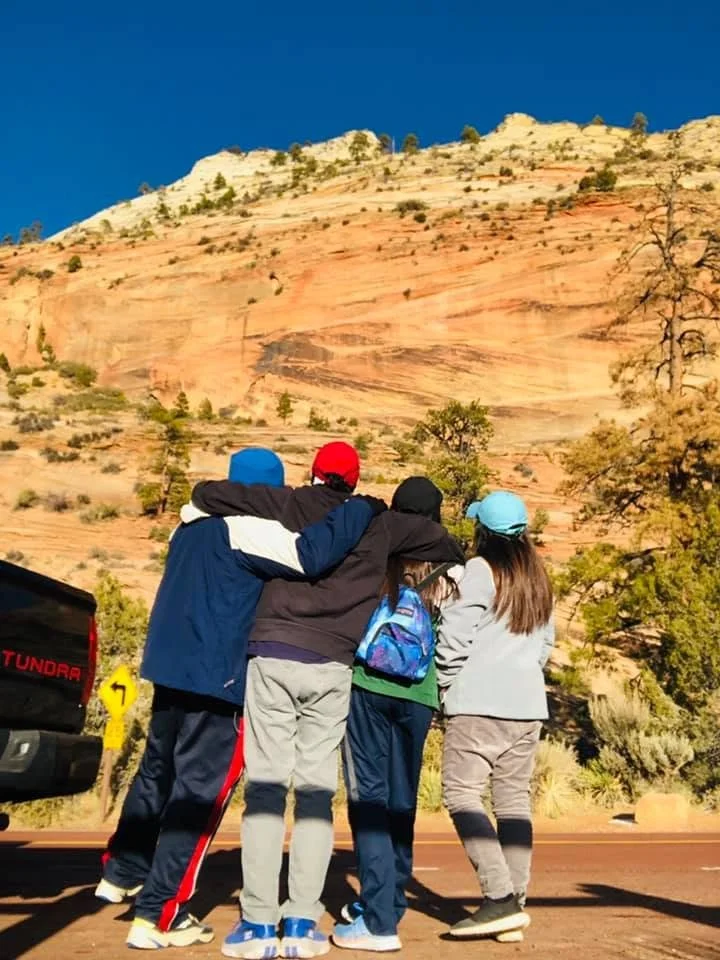
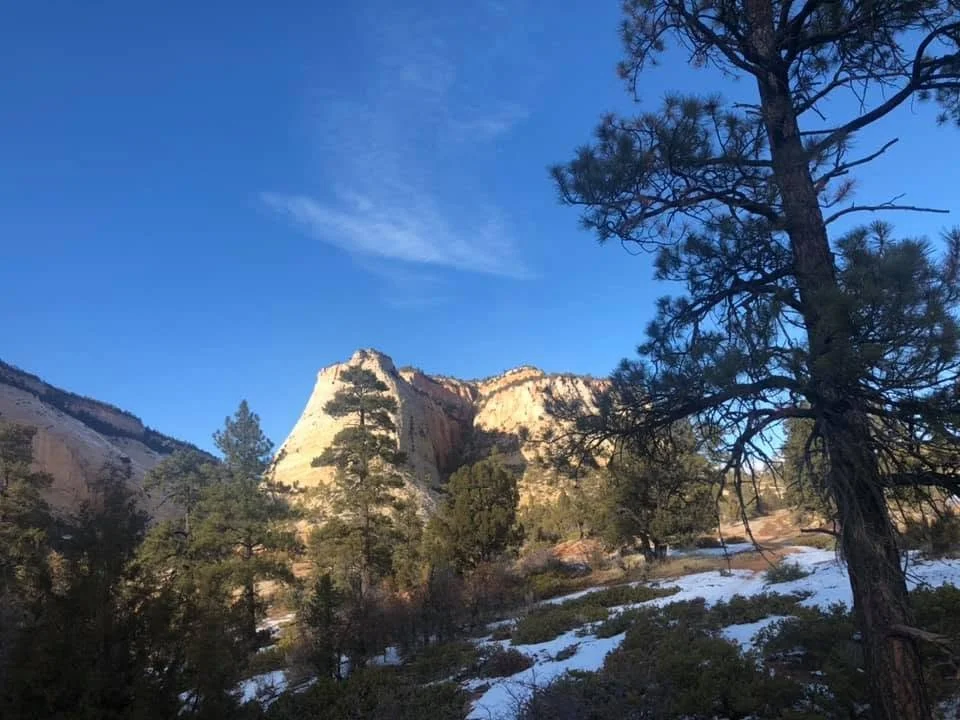
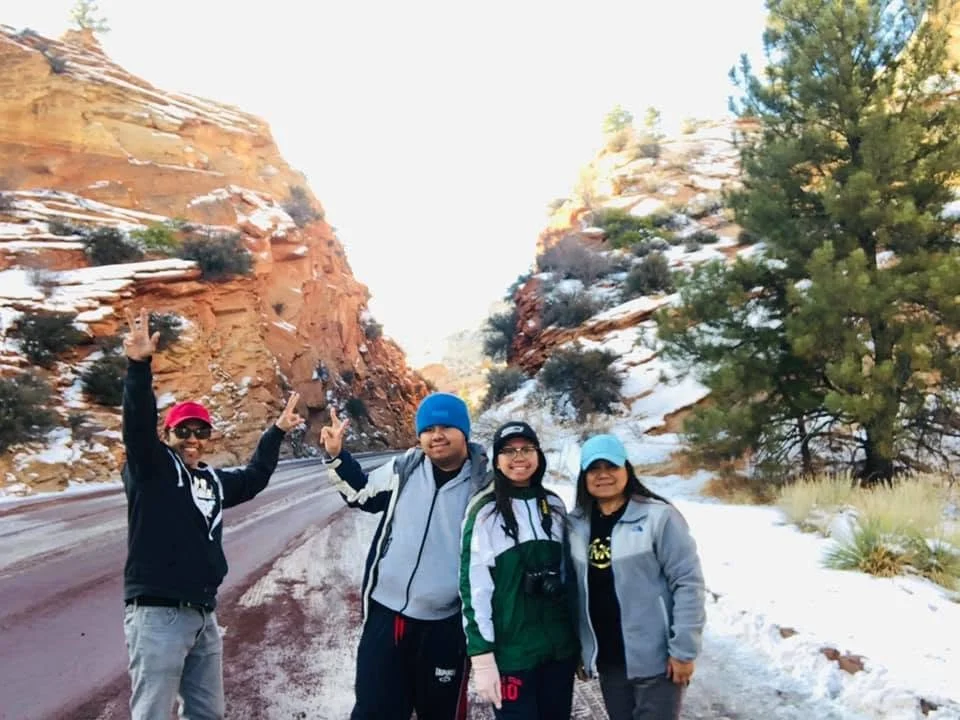
Winter had transformed portions of the landscape. Patches of snow rested beneath the trees and against the rocks, while Zion's enormous sandstone cliffs towered above us under a brilliant blue Utah sky.
My Facebook caption that day was simple: “Breathtaking views at Zion National Park.” Years later, that still describes it perfectly.
The snow didn't take away Zion's famous colors. If anything, the contrast made them even more dramatic—white snow against orange, cream and red sandstone.
There were moments when the scale of everything around us made us feel very small. Sometimes you don't need to understand every geological process happening around you. Sometimes you simply look up.
Driving the Zion–Mount Carmel Highway
Once again, the road became part of the adventure.
We drove the historic Zion–Mount Carmel Highway through Zion's spectacular landscape. The National Park Service describes the highway east of Zion Canyon as a route with distinctive sandstone formations, scenic overlooks and trails. Current visitors should also review vehicle-size restrictions and road conditions before driving the route.
On New Year's Day 2021, we weren't simply driving through Zion. We were following a route that helped connect travelers through this remarkable landscape—and our next destination was Bryce Canyon.
Zion in Winter
Our January visit showed us a side of Zion that warmer-season photographs don't always capture.
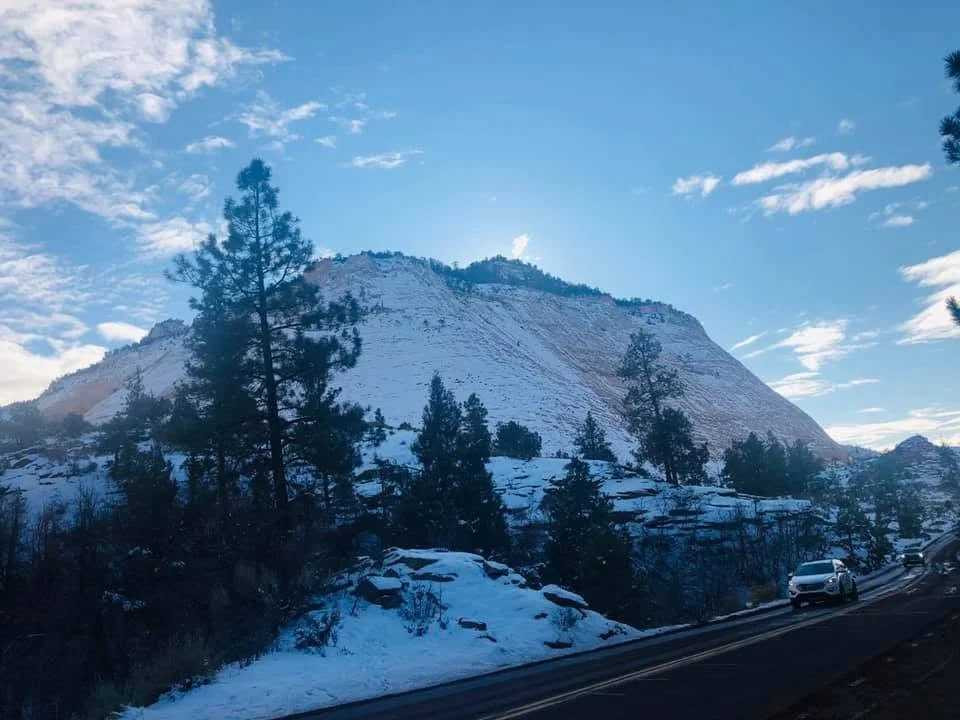
Snow along the roads and beneath the cliffs created a beautiful contrast against the sandstone.
Winter conditions can change quickly, so anyone planning a similar trip should check the current National Park Service conditions before visiting.
Our experience belongs to January 2021. Conditions and access can be different today.
Explore Zion Tours & Experiences →
From Zion to Bryce — Connected by More Than a Road
The following day, January 2, 2021, we continued to Bryce Canyon National Park.
We had just spent New Year's Day looking upward at Zion's massive sandstone walls. Bryce gave us an entirely different perspective.
Here, we would find ourselves looking outward—and downward—over an extraordinary landscape.
Bryce Canyon — A Winter Wonderland of Hoodoos
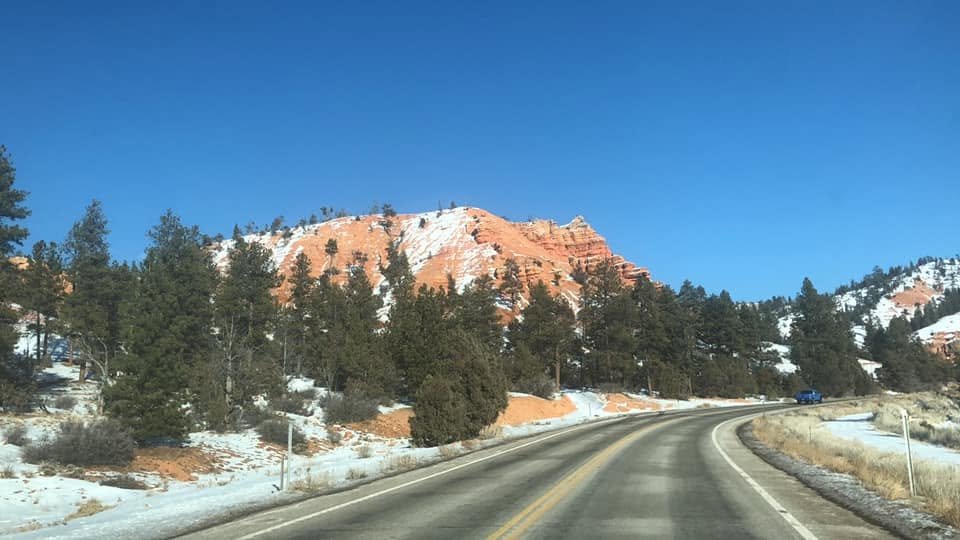
Even the drive toward Bryce was beautiful. Snow lined the road and covered the surrounding terrain while Utah's orange rock still peeked through.
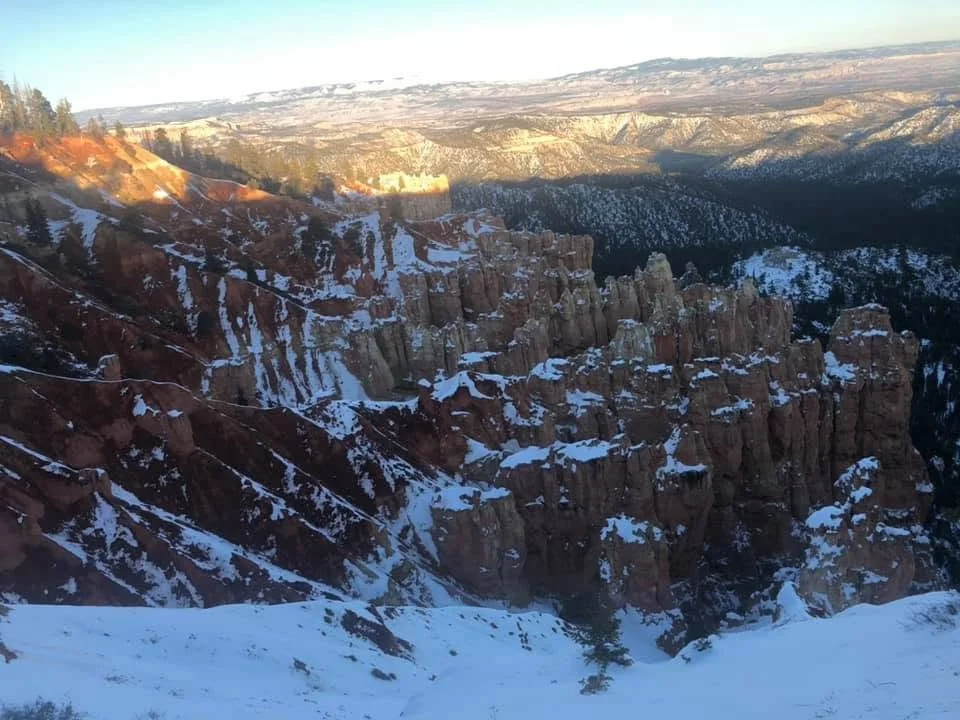
Then we reached the overlooks. The landscape opened beneath us.
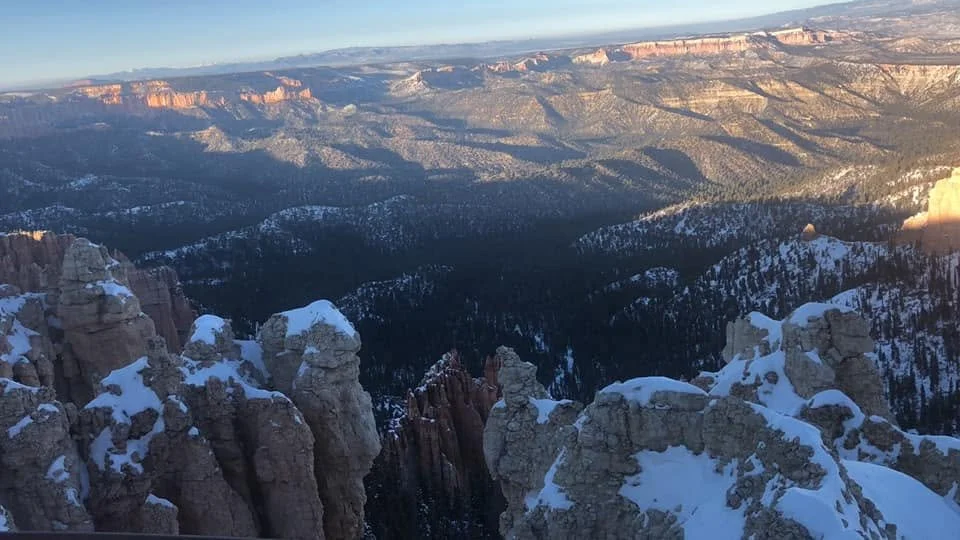
Orange and cream-colored formations rose from the amphitheaters below, with winter snow tucked between them.
Bryce's famous formations are called hoodoos—irregular columns of rock sculpted by weathering and erosion. Seeing them covered with snow made the landscape even more striking.
Following the Scenic Road Higher
Rather than experiencing Bryce from only one overlook, we continued along the scenic road and stopped at several viewpoints.
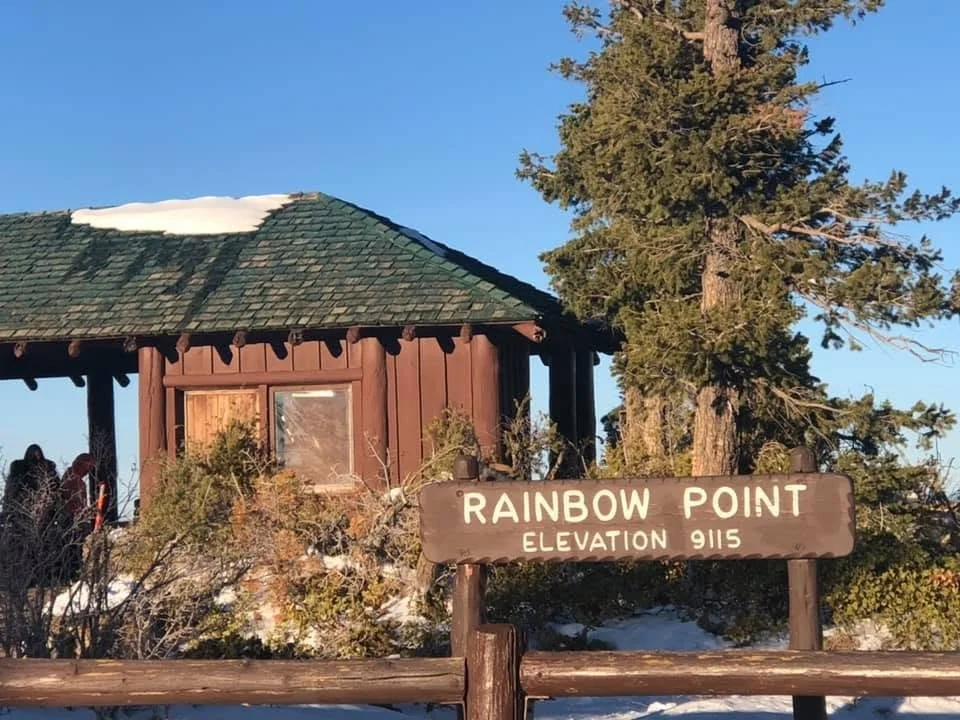
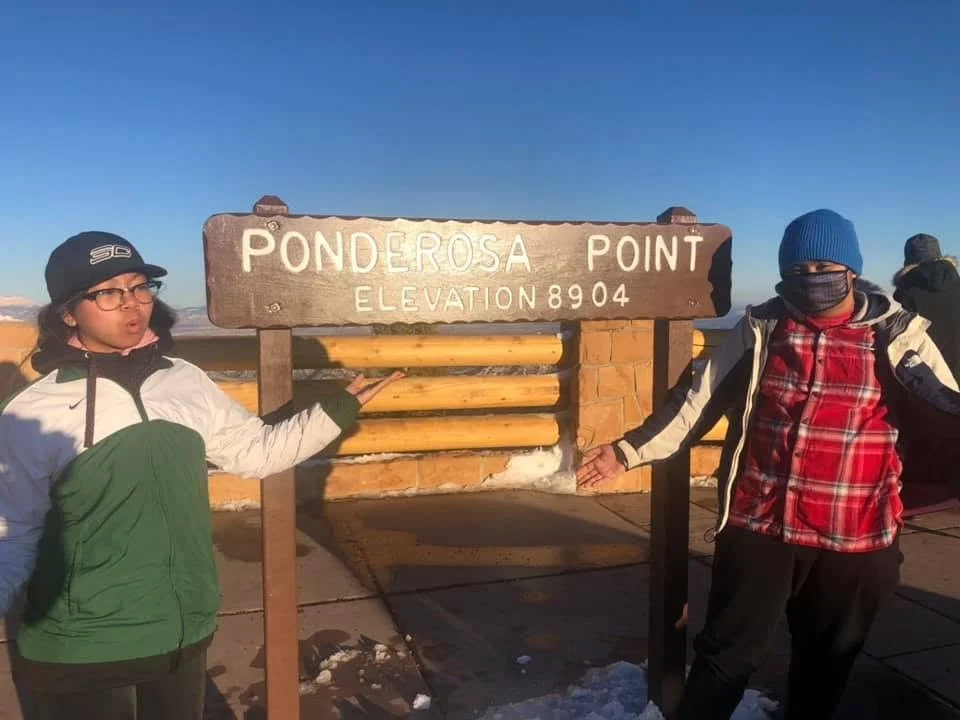
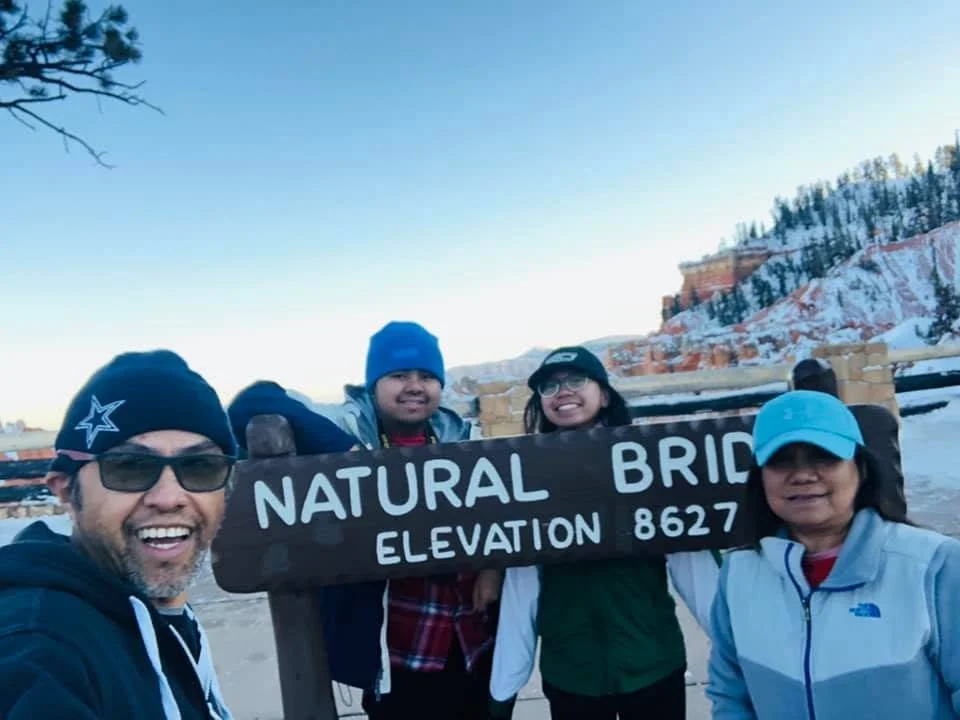
Our photographs document Ponderosa Point (8,904 feet), Natural Bridge (8,627 feet), and Rainbow Point (9,115 feet).
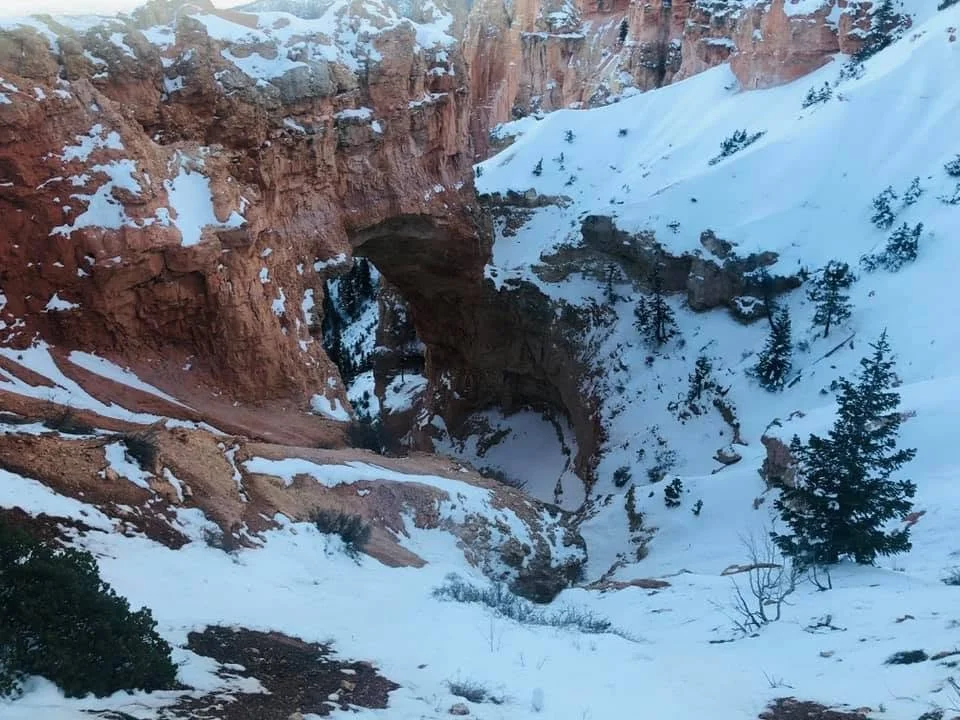
Natural Bridge, despite its name, is a natural arch formed through weathering and erosion.
Rainbow Point — 9,115 Feet
One of the highest documented stops in our photographs was Rainbow Point, elevation 9,115 feet.
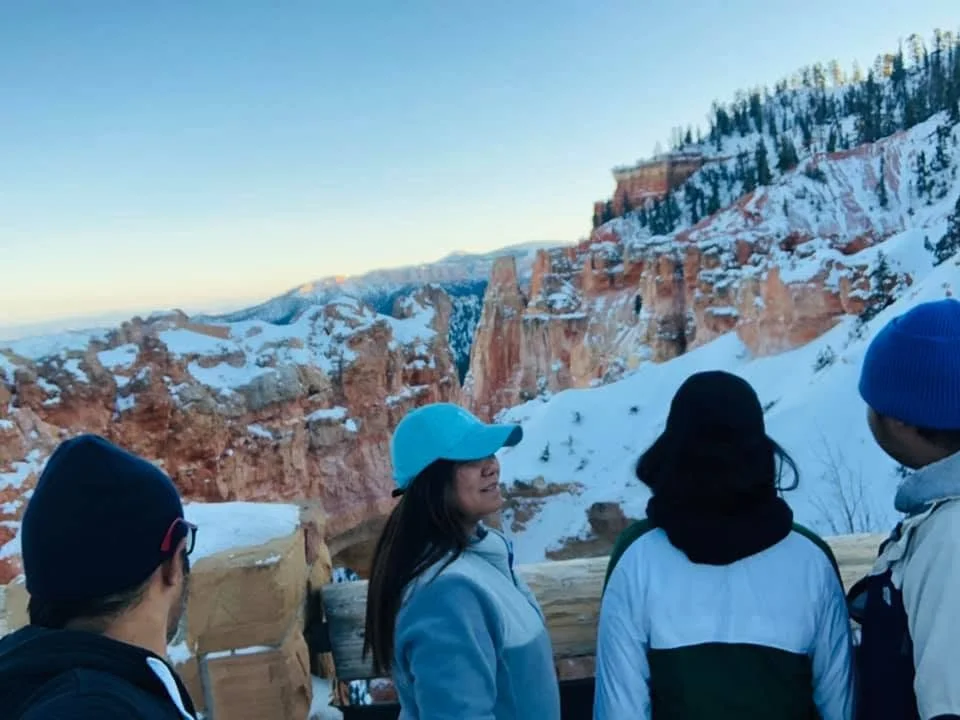
Standing there in the winter cold, looking across miles of Utah landscape, gave us another one of those moments when a photograph could capture the view—but never quite capture how enormous it felt in person.
At that elevation, winter was unmistakable. Snow covered the ground around us, but beyond it stretched an extraordinary landscape of forest, cliffs and distant horizons.
We took our photographs. We looked out over the scenery. And we simply enjoyed being there together.
Bryce Canyon in Winter
Winter gave Bryce a personality all its own. The white snow against the orange hoodoos created a contrast that we still remember vividly.
Winter also means changing conditions. The National Park Service notes that after storms, the main park road may temporarily close beyond mile 3 while crews clear the higher southern scenic drive. Visitors should check the official winter guidance and current conditions before traveling.
Our photographs show what Bryce looked like during our visit—not a guarantee of what another winter day will look like.
Explore Bryce Canyon Tours & Experiences →
Two States. Two National Parks. One Journey.
After Bryce, we made our way back to our Sedona base.
And just like that, another chapter of our 50 States Journey had been written.
Arizona — State #20: Sedona; Slide Rock State Park.
Utah — State #21: Zion National Park; Bryce Canyon National Park.
At the time, we were simply enjoying a family road trip.
We didn't know that years later we would be retracing these journeys, counting the states we'd visited, remembering the National Parks we'd explored and realizing just how many stories had accumulated along the way.
Today, we've reached 48 states, with only Alaska and Oregon still waiting for our footprints.
But looking back at States #20 and #21 reminds us that the numbers were never really the most important part.
We remember cruising through Sedona with red rocks right before our eyes. We remember bouncing along the trail while our Jeep guide gave the landscape a story. We remember exploring Slide Rock during an unusual season in our lives. We remember beginning 2021 beneath Zion's towering sandstone cliffs. And we remember standing more than 9,000 feet above sea level at Bryce Canyon, surrounded by snow and an almost endless Utah horizon.
Those are the footprints behind the numbers. And those are the stories we want to preserve.
Some footprints mark where you've been. Others remind you how blessed you were to experience the journey.